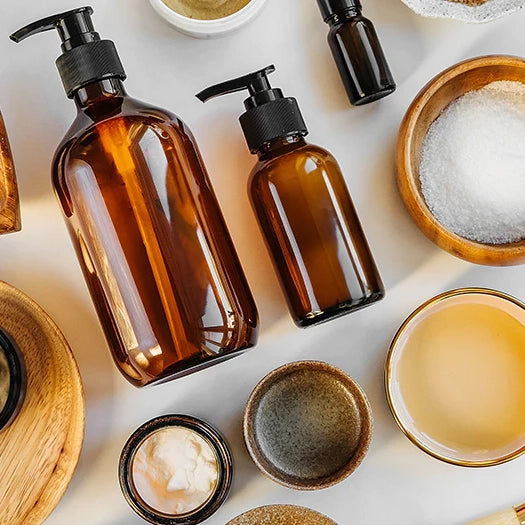


Does your homemade skincare need a preservative—and which one should you choose? This beginner-friendly guide explains when preservation matters, how pH affects your choice, and what to know about common options, from Leucidal and Naturagard to Optiphen Plus. A practical starting point for making informed decisions about your DIY creams, lotions, serums and more.
One of the most common questions in DIY skincare communities is: do I need a preservative, and which one should I use? The answer depends on what's in your formula. This guide walks through the key decisions in plain language — no chemistry degree required.
Important: This guide is for educational purposes only. It does not constitute professional formulation advice. If you are creating products for sale or want to make stability and safety claims, please consult a qualified cosmetic formulation professional.
Step 1: Does your formula contain water?
This is the single most important question. Bacteria, mould, and yeast need water to grow. An anhydrous (water-free) formula — like a straight oil, a wax balm, or a whipped body butter — generally has a low risk of microbial growth when it is made hygienically and kept dry. However, consider how it will be used. A sugar scrub handled with wet fingers or kept in the shower may need a suitable preservation strategy, even if no water was added during making.
For beginners, stored products containing water, hydrosols, aloe vera juice or other water-based ingredients should use a recipe with an appropriate preservative system.
If your formula contains water — including aloe vera gel, hydrosols, floral waters, or any water-based extract — a preservative is essential. This includes:
- Toners and face mists
- Lotions and creams (emulsions)
- Water-based serums
- Leave-on gels
- Room sprays

Step 2: Is your product leave-on or rinse-off?
Both leave-on and rinse-off products containing water need effective protection against bacteria, yeast and mould. Being rinsed off does not prevent contamination inside the bottle.
The intended use still matters: check that your preservative is suitable for the product type and application area, including any restrictions for sprays, eye-area products or children’s products.
Step 3: What is your formula's pH?
Most preservatives have a pH window where they are effective. Formulating outside that window can render a preservative inactive — even if it appears in the formula at the correct usage rate.
Choose a pH that suits both your skincare formula and its preservative system. Use a calibrated pH meter suitable for your product, and follow the recipe or supplier’s measurement method.
Check the finished product after adding all ingredients, including the preservative, and after any pH adjustment. A correct pH supports preservation but does not prove that the product is adequately preserved.
Always measure pH with a calibrated meter or reliable test strips after adding your preservative, not before.
Step 4: Choosing a preservative
There is no single preservative that suits every DIY skincare product. The right choice depends on your ingredients, the finished product’s pH, how you make it, and how it will be packaged and used.
Look for protection against bacteria, yeast and mould, often described as broad-spectrum protection. A preservative that works in one recipe may not work equally well in another.
For beginners, a ready-made preservative blend with clear supplier instructions is generally easier to work with than building a preservation system from individual ingredients.

Common preservatives you may come across
The table below is a starting point for comparing options. Usage percentages refer to the total weight of the finished formula. Always follow the current instructions for the exact product you purchase: similar names do not necessarily mean identical ingredients or performance.
| Preservative or system | Where it may be useful | Main consideration |
|---|---|---|
| Naturagard ECT / Geogard ECT / Preservative Eco | Creams, lotions and other compatible water-containing products | Broad-spectrum blend; check solubility, odour and application restrictions |
| Optiphen Plus | Compatible acidic creams, lotions and cleansing products | Performs best below pH 6; different from original Optiphen |
| Liquid Germall Plus | Many compatible water-based creams, lotions and gels | Low usage level; heat-sensitive and a conventional synthetic option |
| Phenoxyethanol-based blends, such as Euxyl PE 9010 | Compatible creams, lotions, serums and gels | A formulated blend is different from Phenoxyethanol used alone |
| Sodium Levulinate + Sodium Anisate systems | Appropriately acidic formulas using a supplier-supported preservation system | Strongly dependent on pH and the rest of the formula |
| Geogard 221 | Compatible creams, lotions and cleansing products | Benzyl alcohol-based option; check the exact supplier’s pH guidance |
| Geogard Ultra | Compatible water-containing formulas | Powdered blend requiring dissolution and careful pH control |
| Leucidal products | Formulas developed for the specific Leucidal version | Check the full product name, INCI and evidence for the finished formula |
Naturagard ECT, Geogard ECT and Preservative Eco
This blend contains Benzyl Alcohol, Salicylic Acid, Glycerin and Sorbic Acid. Geogard ECT’s manufacturer lists a typical usage level of 0.6–1% and a recommended pH range of 3–8.
It is a useful option to investigate for natural skincare recipes, although it can contribute a noticeable smell and has formulation and application restrictions.
Naturagard Liquid ECT and Plantaserv M are sold with this ingredient combination. However, neither “Naturagard” nor “Plantaserv” alone identifies a particular preservative: check the full name and INCI before buying or substituting. explore.arxada.com
Optiphen Plus
Optiphen Plus combines Phenoxyethanol, Caprylyl Glycol and Sorbic Acid. It is a conventional preservative blend used in compatible skin and hair care formulations.
Its main consideration is pH: it performs best in acidic formulas below pH 6. Check the supplier’s usage instructions and compatibility guidance, particularly when working with emulsions. Original Optiphen and Optiphen Plus are different products, so their instructions are not interchangeable. origin-www.ashland.com
Liquid Germall Plus
Liquid Germall Plus contains Propylene Glycol, Diazolidinyl Urea and Iodopropynyl Butylcarbamate. The manufacturer lists a usage range of 0.1–0.5%, an effective pH range of 3–8, and addition below 50°C.
It provides broad-spectrum antimicrobial activity at a relatively low concentration. Accurate weighing matters: a small batch may require only a fraction of a gram.
It is a conventional synthetic system containing a formaldehyde-releasing ingredient, so it may not fit every formulator’s ingredient preferences. Check application restrictions as well as dosage and temperature instructions. ashland.com
Phenoxyethanol and ready-made Phenoxyethanol blends
Phenoxyethanol appears in several preservative systems, but Phenoxyethanol alone and a blend containing it are different ingredients.
For example, Euxyl PE 9010 combines Phenoxyethanol with Ethylhexylglycerin, which improves antimicrobial activity. Its manufacturer lists broad-spectrum efficacy, a usage level of 0.5–1%, and a pH range of 3–12.
For beginners, following a recipe designed around a named blend is clearer than substituting plain Phenoxyethanol. Even a blend with a wide pH range still needs to be compatible with the full formula. origin-www.ashland.com
Sodium Levulinate and Sodium Anisate
Sodium Levulinate and Sodium Anisate are naturally derived, broad-spectrum antimicrobials commonly used together to preserve and protect modern cosmetic formulations. As the sodium salts of levulinic acid (sugar cane or corn) and anisic acid (star anise), they offer effective protection against bacteria, yeast, and fungi, making them a popular choice in natural preservation systems.
When blended with glycerin (rapeseed) in a water-based solution, this duo becomes an easy-to-use, vegan-friendly ingredient that fits seamlessly into a wide range of formulations - from shampoos and body washes to emulsions and cosmetics. Beyond preservation, both components provide additional skin-conditioning and moisturising benefits, without affecting the colour or aroma of your final product. personal-care.evonik.com
For a beginner recipe, use the specified commercial blend and its instructions. A diluted liquid blend is not equivalent to the same percentage of individual raw ingredients.
Two other names worth recognising
Geogard 221 contains Dehydroacetic Acid, Benzyl Alcohol and Water. Arxada lists a typical usage range of 0.2–1.1% and pH 2–7. Follow the instructions for the product you buy; some suppliers recommend a narrower working range.
Geogard Ultra is a powdered blend of Gluconolactone and Sodium Benzoate. Arxada lists a typical usage range of 0.75–2% and pH 3–6.5. Dissolution and pH management are important parts of using it correctly.
Where does Leucidal fit?
Leucidal is a family of fermentation-derived antimicrobial ingredients. Original Leucidal Liquid, Leucidal Liquid SF, and the Complete versions have different compositions, so always check which one your recipe specifies.
Original Leucidal Liquid has the INCI Leuconostoc/Radish Root Ferment Filtrate. The Complete versions combine additional antimicrobial ingredients. Active Micro Technologies
If you choose Leucidal, follow the instructions for that exact version and use a formula developed around it. Adding a second antimicrobial ingredient is not, by itself, proof that the finished product is adequately preserved.
Leucidal is commonly used at 2–4% in water-containing formulas including toners, creams, lotions, and room sprays. It is most often paired with Elderberry Phytocide to create a dual-preservation system that covers a broader spectrum of microbes.

A note on ferment-based preservatives used alone
A frequently asked question in DIY communities is whether a ferment like Leucidal can be used as a sole preservative. Ferments can be effective, but their efficacy depends on your full formula — the other ingredients, the pH, the water activity, and how the finished product will be stored and used. Many formulators choose a complementary second preservative or a rigorous challenge test to verify real-world performance. Refrigeration alone does not replace a preservative in a water-based leave-on product.
If you are unsure, the safer approach is to combine Leucidal with Elderberry Phytocide as described in the product information, or to seek guidance from a qualified formulation professional before sharing or selling.
What does “natural” mean for a preservative?
A preservative may be naturally derived, nature-identical, or accepted by a particular natural cosmetic certification standard. These descriptions do not all mean the same thing.
Check certification claims for the exact ingredient you buy. Acceptance of a raw material does not automatically certify your finished skincare product.
The practical priority is choosing a system that protects your formula effectively and suits its intended use.
Practical use advice
- Weigh preservatives rather than measuring them in drops. For a 100 g finished batch, a 1% usage rate means 1 g of preservative, included within the total 100 g formula.
- Do not swap preservatives gram-for-gram without reviewing the dosage, pH, solubility, temperature limits and ingredient compatibility.
- Vitamin E helps slow oxidation in oils; it does not protect a water-containing product against bacteria, yeast or mould. Include it where appropriate for the oils in your formula.
Patch testing
Even a correctly preserved formula can cause a reaction in some individuals. Before using any new DIY product:
- Apply a small amount to the inner forearm or behind the ear.
- Wait 24–48 hours before broader application.
- Discontinue use if redness, itching, or irritation occurs.
- Patch test each new batch, even if the recipe has not changed — ingredient lots can vary.
A home patch test may reveal irritation, but it cannot establish microbial safety or rule out an allergy.
Preservative efficacy testing, also called challenge testing, assesses how well the finished formula resists introduced microorganisms. It is different from checking whether a freshly made batch is clean. A product’s appearance and smell cannot confirm that it is microbiologically safe.
When to consult a qualified formulation professional
Some situations call for expertise beyond a beginner guide:
- You plan to sell or gift your products to others.
- Your formula includes unusual ingredients, high actives, or a complex pH profile.
- You want to make any claims about your product's safety, shelf life, or efficacy.
- Your chosen preservative system has not been challenge tested.
- You are formulating for sensitive skin, children, or broken skin.
A cosmetic chemist or qualified formulation consultant can arrange or interpret preservative efficacy (challenge) testing and help you formulate with confidence.
Quick-reference summary
- No water in your formula? No preservative needed — but avoid introducing water during use.
- Water present? A preservative is always required, leave-on or rinse-off.
- Check your pH after adding the preservative to confirm it falls within the active range.
- Ferment-based preservatives like Leucidal Liquid work well in many formulas and are commonly paired with a complementary preservative for broader coverage.
- Refrigeration is not a substitute for preservation in water-based products.
- Patch test every new batch before use.
- Consult a professional before selling, gifting, or making safety claims.
Ready to make your own skincare? Explore our Complete DIY Skincare Kits.