

Make your own nourishing vegan lip balm with this simple DIY recipe featuring soothing calendula-infused oil, creamy mango and shea butters, jojoba and castor oils, and plant-based candelilla wax. Perfect for beginners, this natural lip balm helps soften, condition and protect dry lips — without beeswax, synthetic fragrance or unnecessary ingredients.
DIY Vegan Calendula & Mango Lip Balm: A Soothing Natural Lip Balm Recipe
Dry, chapped lips are one of those little annoyances that can crop up at any time of year. Cold weather, wind, dry indoor air and everyday exposure to the elements can all leave the delicate skin of the lips feeling dry, tight or uncomfortable.
A good lip balm doesn't need a long list of ingredients. In fact, one of the advantages of making your own is being able to create a beautifully nourishing balm from a relatively small selection of plant oils, butters and waxes.
This Vegan Calendula & Mango Lip Balm combines calendula-infused oil, mango and shea butters, jojoba and castor oils with plant-based candelilla wax to create a rich, protective balm that helps soften the lips and reduce moisture loss.
It is completely beeswax-free, making it a lovely option for anyone looking for a vegan lip balm — and it is also a relatively simple natural skincare recipe for beginners.
What makes this a good lip balm?
The skin on our lips is different from the skin covering much of the rest of our body. It has a relatively thin protective barrier and lacks the oil-producing sebaceous glands that help keep other areas of skin naturally lubricated.
That means lips can lose moisture relatively easily.
This formula uses a combination of emollient and occlusive ingredients to address that.
The plant oils and butters act primarily as emollients, helping soften and smooth the surface of dry lips. Candelilla wax provides structure to the balm while also helping create a light protective layer over the lips, slowing the loss of moisture.
Rather than relying on a single oil or butter, the formula combines ingredients with slightly different properties. Calendula-infused oil provides the soothing botanical element; shea and mango butters add richness; jojoba gives the balm a smooth, conditioning feel; and castor oil provides excellent slip and a subtle natural gloss.
The result is a simple but beautifully nourishing everyday lip balm.
DIY Vegan Calendula & Mango Lip Balm Recipe
This formula is written in percentages so it can easily be scaled to suit the amount you would like to make.
Formula
| Ingredient | Percentage |
|---|---|
| Candelilla wax | 14% |
| Shea butter | 18% |
| Mango butter | 10% |
| Calendula-infused oil | 32% |
| Castor oil | 15% |
| Jojoba oil | 10% |
| Vitamin E | 1% |
| Total | 100% |
For example, if you make a 100 g batch, the percentages translate directly into grams: 14 g candelilla wax, 18 g shea butter, 10 g mango butter and so on.
For smaller batches, simply multiply each percentage by your desired total batch weight. When making very small batches, however, you will need scales accurate enough to measure the ingredients reliably.
Equipment you will need
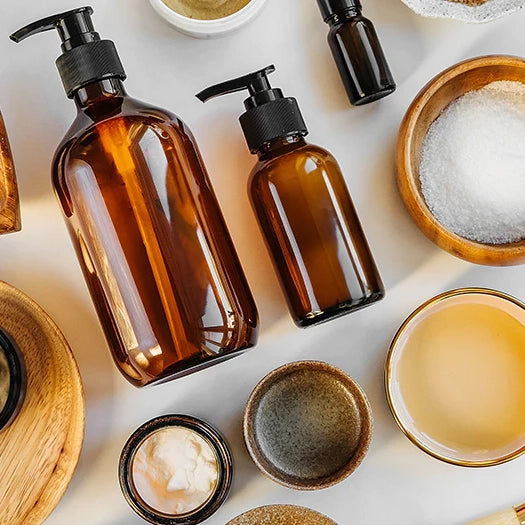
You don't need a lot of specialist equipment to make lip balm, but accurate scales and clean equipment are important.
You will need:
- Digital scales accurate to at least 0.1 g
- Heat-safe glass beaker or small jug
- Small saucepan for creating a water bath/double boiler
- Stainless steel spatula or stirring rod
- Lip balm tubes, tins or small cosmetic pots
- Isopropyl alcohol for sanitising your equipment and containers
- Paper towel or clean cloth for preparing your workspace
A small pouring beaker can be particularly useful when filling lip balm tubes or small pots because the balm begins to set fairly quickly as it cools.
Before you begin: prepare your workspace
Making skincare at home doesn't require a laboratory, but it is still important to start with a clean, organised workspace.
Make sure to wash your hands thoroughly and clean your work surface. Wash your equipment and containers, allow them to dry completely, then sanitise with 70% isopropyl alcohol. Allow it to evaporate before you begin.
Make sure your containers are completely dry. Introducing water into an otherwise water-free product can increase the potential for microbial contamination.
Unlike a cream or lotion containing water, this lip balm is an anhydrous product, meaning it contains no water. For that reason, a broad-spectrum preservative is not normally required.
Vitamin E is included as an antioxidant to help slow oxidation of the plant oils. It is important to remember, however, that Vitamin E is not a preservative.
How to make your lip balm
1. Prepare your water bath
Add a small amount of water to a saucepan and place it over low to medium heat. You want enough water to gently heat the beaker without allowing water to splash into your ingredients.

2. Weigh the ingredients
Into your heat-safe beaker or container, weigh:
- Candelilla wax
- Shea butter
- Mango butter
- Calendula-infused oil
- Castor oil
- Jojoba oil
Keep the Vitamin E aside for now.

3. Melt gently
Place the beaker into the warm water bath and heat gently.
Stir occasionally until the candelilla wax and butters have completely melted and the mixture is clear and uniform.
Avoid unnecessarily high temperatures or prolonged heating. You only need enough heat to completely melt the wax and butters.
4. Add the Vitamin E
Remove the beaker from the water bath.
Allow the mixture to cool slightly while remaining completely liquid, then add the Vitamin E and stir thoroughly.

5. Pour
Carefully pour the liquid balm into your clean, sanitised lip balm tubes, tins or pots.
Work fairly quickly at this stage because candelilla wax can begin to set as the mixture cools.
6. Allow to set
Leave the lip balms undisturbed at room temperature until completely solid.
Once set, add the lids or caps and label your lip balm with the product name and date made.
What each ingredient does
Candelilla wax
Candelilla wax is a hard plant wax obtained from the leaves of the candelilla shrub (Euphorbia cerifera), which grows naturally in arid regions of Mexico and the southern United States.
In this recipe, it replaces the beeswax traditionally used in many lip balms, making the formula suitable for people looking for a vegan alternative.
Candelilla wax gives the balm its structure and helps create a protective layer over the lips that can reduce moisture loss.
It is considerably harder than beeswax, which is why you generally can't simply substitute the two at equal percentages in an existing recipe.
Shea butter
Shea butter is a wonderfully rich emollient derived from the nuts of the African shea tree.
Its fatty acids help soften and condition dry skin, while its rich texture gives this balm a creamy, comforting feel.
In a lip balm, shea butter works alongside the wax and other oils to help smooth dry, rough-feeling lips and leave them feeling softer.
Mango butter
Mango butter is obtained from the kernels of mango seeds.
Despite its name, refined mango butter generally has little or no mango scent. It has a smooth texture and is firmer than shea butter, making it particularly useful in balms.
Here it contributes both structure and emollience, helping create a lip balm that feels rich without relying on a very high percentage of wax.
Mango butter is also a useful alternative to cocoa butter, which can sometimes be more expensive or difficult for home formulators to source.
Calendula-infused oil
Calendula (Calendula officinalis) has a long history of use in traditional preparations for soothing and conditioning the skin.
Calendula-infused oil is made by infusing dried calendula flowers into a carrier oil, allowing oil-soluble components of the plant to move into the oil.
Its gentle, soothing reputation makes calendula a particularly appealing ingredient for a product designed for dry or delicate lips.
The properties of a calendula infusion will also depend on the carrier oil used to make it, so check your supplier's ingredient information. If you're selling or gifting your lip balm, the underlying carrier oil should be included in the ingredient declaration.
Castor oil
Castor oil has a thick, distinctive texture that makes it particularly useful in lip products.
It provides excellent slip and helps give the finished balm a smooth application and subtle sheen. It also helps counterbalance the harder feel of candelilla wax.
At 15% of this formula, it contributes noticeable conditioning and gloss without turning the product into a sticky lip gloss.
Jojoba oil
Despite commonly being called an oil, jojoba is technically a liquid wax ester.
Its excellent oxidative stability and silky skin feel make it a popular ingredient in natural skincare. In this lip balm, jojoba helps improve glide and leaves the lips feeling smooth and conditioned.
It also complements the richer texture of the shea and mango butters.
Vitamin E
Vitamin E, or tocopherol, is included primarily as an antioxidant.
Oils and butters can gradually oxidise when exposed to oxygen, light and heat, eventually becoming rancid. Vitamin E helps slow this process and therefore supports the stability of the oil phase.
It also provides emollient and skin-conditioning properties.
Vitamin E should not be confused with a preservative. It helps protect the oils from oxidation; it does not protect a product from bacteria, yeast or mould.
Why haven't we added essential oils?
You'll notice this recipe doesn't contain essential oils or fragrance.
That's deliberate.
Lip products are applied frequently and are used immediately around the mouth, so a beautifully formulated lip balm doesn't need essential oils to be effective.
Leaving them out also makes the recipe simpler and allows the natural ingredients — particularly calendula, mango butter and shea butter — to be the focus.
If you decide to formulate a flavoured or scented version, make sure any flavour or aromatic ingredient you choose is specifically suitable for use in lip products and follow the supplier's recommended usage limits.
How to use your lip balm
Apply a thin layer of balm directly to clean, dry lips whenever they feel dry or in need of extra protection.
If you're using a pot or tin rather than a tube, apply with clean fingers to minimise introducing dirt or moisture into the container.
The balm can be particularly useful:
- Before heading outdoors in cold or windy weather
- Before bed as a richer overnight lip treatment
- Whenever lips begin to feel dry or tight
- Under or over lip colour when extra conditioning is needed
Remember that this is a moisturising and protective lip balm — it does not provide sun protection. When spending time outdoors, particularly in strong Australian sun, use a dedicated lip product with appropriate SPF protection.
Storage and shelf life
Store your finished lip balm in a cool, dry place away from direct sunlight and excessive heat.
This is particularly important for natural balms because high temperatures can soften or partially melt the product. Repeated melting and cooling can also alter the texture of some plant butters.
Avoid leaving your lip balm in particularly hot places such as a car on a warm day.
Because this formula contains no water, it has a much lower risk of microbial growth than a water-based cream or lotion. Its practical shelf life will instead be strongly influenced by the freshness and oxidative stability of the oils and butters used to make it.
Check the expiry or best-before dates of your raw ingredients and always begin with fresh ingredients.
Without professional stability testing, it isn't possible to assign a precisely validated shelf life to a homemade cosmetic. For home use, make relatively small batches and monitor the product over time.
Discard your lip balm if you notice a significant change in its smell, colour, texture or appearance, particularly if the oils develop a stale or rancid smell.
A simple introduction to making your own skincare
Lip balm is a lovely place to start if you're new to DIY skincare.
Unlike creams and lotions, there is no water phase to emulsify, no pH to adjust and — provided you keep water out of the formula — no need for a conventional broad-spectrum preservative.
At the same time, making a balm introduces some of the basic principles of cosmetic formulation: weighing accurately, understanding the balance between waxes, butters and liquid oils, working hygienically and learning how different ingredients affect the final texture.
And there's something particularly satisfying about turning a handful of simple plant-based ingredients into a beautiful little pot or tube of lip balm that you can actually use every day.
We also provide complete DIY Skincare Kits to make it start you on your skincare making journey,
This recipe is provided for general educational purposes. Patch-test before use and discontinue use if irritation occurs. Avoid using the product on severely cracked, bleeding or infected lips; seek appropriate medical advice if irritation or lip problems are persistent.